
PROXIES FOR FACEBOOK

FACEBOOK PROXIES
FOR AD ACCOUNTS AND PAGES

One person, one browser profile, one dedicated carrier IP — for the ad accounts and Pages you run, in the country they belong to.

  • Ad accounts and Pages
  • One IP per profile
  • Rotating pool for ad checks

FROM$85/ monthDedicated 4G in United States · rotating mobile from $4.75/GB

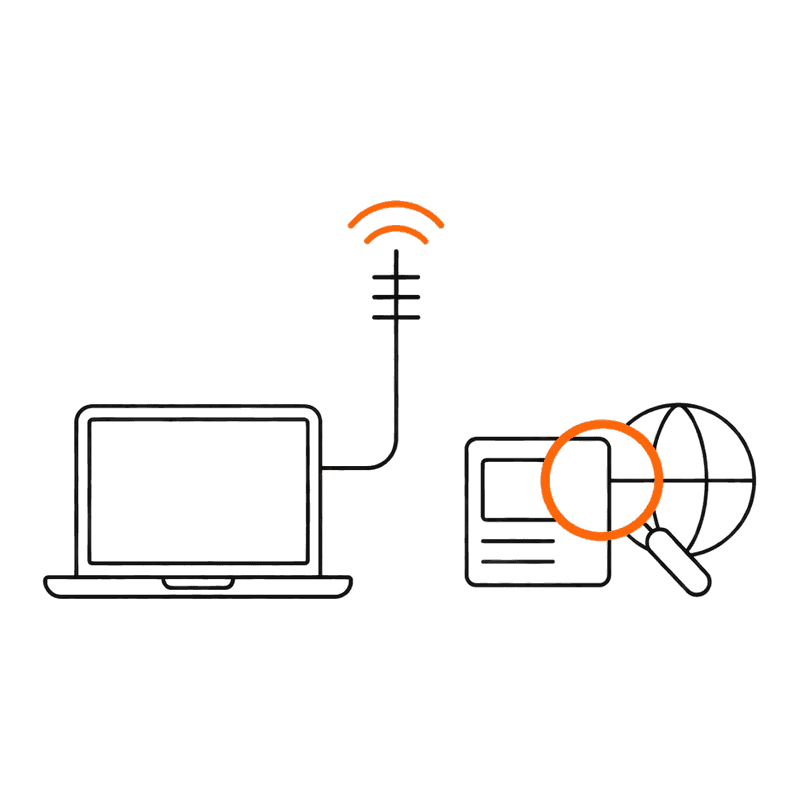
A laptop on a single line to one carrier mast, beside a magnifying glass held over a small ad card and a globe; the mast and the glass in orange
// SECTION: WHY CARRIER IPS
001

What you get for Facebook

  • A stable home for logins

    The same carrier IP for up to 24 hours at a time, so a profile’s sessions come from one consistent place.

  • Fewer IPs than you think

    One person can manage up to 25 ad accounts, so you need an IP per person and profile, not per ad account.

  • Check ads by country

    See landing pages, redirects and checkouts as a visitor in each targeted country on rotating mobile, from $4.75/GB.

// SECTION: PLANS
002

Two jobs, two plans

DEDICATED 4G / 5G

One carrier IP per account

For Facebook accounts that must keep one identity: a carrier modem no other Prox’Easy customer is given.

$85/ month

United States · also France $55 · Italy $85 · Spain $85 · 5G from $70

  • Real carrier IP — Verizon, AT&T, T-Mobile in the US; Orange, SFR, Bouygues Telecom, Free Mobile in France
  • Sticky for up to 24 hours; rotate on demand from your change-IP URL
  • No data caps, billed monthly
  • HTTP, HTTPS and SOCKS5

ROTATING MOBILE

A fresh carrier IP per request

For checking landing pages, redirects and checkout flows as a visitor in each country an ad targets; billed per GB and targeted by country, never for an account.

$4.75/ GB

$2.85/GB from 100 GB · one-time, never expires

  • 4M+ mobile IPs seen in the last 30 days, 180+ countries
  • Country targeting in the username
  • New IP per request, or sticky for 1–120 minutes
  • HTTP and SOCKS5
// SECTION: HOW IT WORKS
003

Live in three steps

  1. Pick a plan and a country

    Dedicated 4G or 5G for accounts, rotating mobile for logged-out work. Pay by PayPal or crypto.

  2. Copy your credentials

    Host, port, username and password are in your client area, ready to paste.

  3. Paste into your tools

    Antidetect browser, cloud phone or script — setup guides cover AdsPower, BitBrowser, MoreLogin, GeeLark and Hubstudio.

// SECTION: PRICING
004

What does a proxy for Facebook cost?

Two price lists for the two jobs. Dedicated mobile for logins is billed per IP per month with no data caps: 4G costs $55 in France, $85 in the United States, $85 in Italy and $85 in Spain; 5G costs $70 in France and $110 in the United States. Rotating mobile for ad checks comes in one-time GB packs that never expire, from $4.75/GB down to $2.85/GB at 100 GB and above. Pay by PayPal or crypto.

Dedicated mobile proxy prices per month by country
CountryDedicated 4GDedicated 5G
United States$85 / month · Order$110 / month · Order
France$55 / month · Order$70 / month · Order
Italy$85 / month · Order—
Spain$85 / month · Order—

Rotating mobile — for checking landing pages, redirects and checkout flows as a visitor in each country an ad targets; billed per GB and targeted by country, never for an account.

$4.75/GB → $2.85/GB · See packs

// SECTION: FAQ
005

Questions about mobile proxies for Facebook

How many Facebook ad accounts can I run on one proxy?

As many as the person using it may manage. Meta’s ad account limits are set per person and per business, not per IP address: one person can manage up to 25 ad accounts, so one dedicated IP per person covers every ad account and Page in their role. Sharing one login between two people breaks Meta’s Terms; two people need two accounts, two browser profiles and two IPs.

Does Facebook ban proxies?

Not by name, in the rules we read on 11 October 2026. Meta’s Terms of Service use the word proxy once, as a verb, in a ban on proxying, requesting or collecting Meta product usernames and passwords; the Advertising Standards overview and the Community Standards on Account Integrity, Spam and Inauthentic Behavior mention neither proxies nor VPNs. The Help Center article cited here names a VPN, not proxies: Page managers confirming their country are told to avoid a VPN or similar service. Unnamed is not the same as allowed — the rules on accounts, automation, cloaking and evasion apply on any network.

Is a mobile proxy better than a residential proxy for Facebook ads?

For the logins, a dedicated mobile IP: given to no other Prox’Easy customer for the month, on a carrier network, holding a session for up to a day. A rotating residential address moves under a login and arrives with other customers’ history attached. For ad and landing-page checks, rotating mobile covers it by country from $4.75/GB; when a check has to come from one particular city, rotating residential is the right tool, because it targets cities and the mobile pool does not.

Will a US proxy make my Facebook Page look US-based?

No. Meta works out a Page manager’s country from the profile’s stated location, the device and the connection, confirms it with a phone’s Location Services, and asks managers to avoid VPN-type services while it does. A business run from outside the United States that wants its Page to show where the business is can complete business verification, which displays a Confirmed Page Owner country; Meta lists agencies based in China among the cases that can require it.

Can a new IP fix a disabled or restricted Facebook ad account?

No. A restricted ad account, Page or user account cannot advertise, and the way to contest the decision is a review request in Account Quality. After a disable, Meta’s Terms require its permission before you create another account, and assets created to evade a removal are grounds for restriction in their own right. A fresh address leaves the device, the payment method and the account history exactly where they were.

Which countries can I get for Facebook?

Dedicated 4G in the United States on Verizon, AT&T, T-Mobile, in France on Orange, SFR, Bouygues Telecom, Free Mobile, and in Italy and Spain; dedicated 5G in the United States and France. The rotating pool reaches 180+ countries at country level, with 4M+ unique mobile IPs seen in the last 30 days as of October 2026, and your dashboard shows the live country list.

// SECTION: RULES & LIMITS
006

Facebook: the rules, the limits and our sources

A Facebook proxy earns its price on two jobs. One is running a business portfolio, its ad accounts and its Pages from one dedicated 4G or 5G carrier IP per login — Verizon, AT&T, T-Mobile in the United States from $85 a month, or a French carrier from $55. The other is checking ads, and the pages they link to, as a viewer in another country sees them, on rotating mobile IPs targeted by country and billed per GB from $4.75. This page is not about unblocking Facebook. It quotes Meta’s own rules on accounts, location and cloaking, then says what an address cannot change.

What is a Facebook proxy for?

Two jobs, and each wants a different product. Running accounts — one person’s Facebook login, plus the business portfolio, ad accounts and Pages that login manages — wants one dedicated mobile line per login, kept by that login all month. Checking what an ad and its landing page look like from another country wants a fresh carrier address in that country for each check, which is the work a rotating pool is built for. Put a login on the rotating pool and its address shifts underneath it; put ad checks on a dedicated IP and you pay a monthly fee to see one country.

One thing this page is not about: opening Facebook on a network that blocks it. That is what web unblockers sell, and nothing below is written for that job.

  • DEDICATED 4G / 5G

    Running accounts

    One carrier IP per login, given to no other Prox’Easy customer, sticky for up to 24 hours and rotated through the change-IP URL. For the people who sign in to Ads Manager, Meta Business Suite and their Pages every working day.

  • ROTATING MOBILE

    Checking ads by country

    Mobile-carrier IPs from a shared pool, chosen by country, a new one on each request unless you hold a sticky session. Per-GB packs that never expire, so occasional checks cost only what they use.

  • NOT THIS PAGE

    Unblocking Facebook

    Reaching facebook.com from a school, an office or a country that blocks it. A monthly carrier IP sold for account work is the wrong product for that, and this is the wrong page.

PER LOGIN
One dedicated IP on Verizon, AT&T, T-Mobile (United States) or Orange, SFR, Bouygues Telecom, Free Mobile (France); Italy and Spain on 4G. No data caps.
SESSION
Sticky sessions of up to 24 hours. Rotation is on demand, through the change-IP URL in your client area.
ROTATING POOL
In October 2026 the pool counted 4M+ unique mobile IPs seen in the last 30 days, spread over 180+ countries. Targeting stops at the country: no city, carrier or 4G/5G choice.
BILLING
Dedicated: per IP per month, from $55. Rotating: one-time GB packs from $4.75/GB, $2.85/GB at 100 GB and up, never expiring. PayPal or crypto.

How many Facebook accounts can one person run?

One personal account. Meta’s Terms of Service say it in as many words, and the Help Center adds that keeping more than one is against the Community Standards. Meta also offered additional profiles inside a single account, for interests or communities; its Help Center now says new ones can no longer be created. Everything a business runs on Facebook — Pages, ad accounts and Instagram accounts — is gathered instead in a business portfolio in Meta Business Suite, and the people working in it sign in with their one personal account or with a managed Meta account, which can also be added to a portfolio.

The business side has limits of its own, and they are wider than most buyers expect. A person can create two business portfolios and belong to any number of them. One person can manage up to 25 ad accounts. A new business starts with an ad account creation limit of one until it makes a confirmed payment. An agency does not need its client’s password, and Meta’s Terms forbid sharing one: Meta’s route is to request access to the client’s ad account, which stays in the client’s portfolio and is shared with the agency’s, and its Advertising Standards require a separate ad account for every client.

So the unit a dedicated IP serves is a person, not an ad account. One staff member with one login, one browser profile and one IP can work every ad account and Page their role allows; three staff members are three logins, three profiles and three IPs. Growing an ad operation on Facebook means more ad accounts and more people — not more personal accounts per person, which Meta’s Terms rule out.

FROM META’S OWN PAGES

“Create only one account (your own) and use it for personal purposes.”

“It's against our Community Standards to maintain more than one personal account.”

“One person can manage up to 25 ad accounts.”

“If you are managing ads on behalf of other advertisers, each advertiser or client must be managed through separate ad accounts.”

Sources, read 11 October 2026: Facebook Help Center — About additional Facebook profiles · Meta Business Help Center — Create a business portfolio · Meta Business Help Center — Add an ad account to your business portfolio

Does Facebook look at the IP address of a business login?

Yes, as one input among several. Meta’s Help Center says the country it assigns to a person who manages a Page comes from their information and activity on Facebook, the connection among them. Its login security also leans on the device: alerts about unrecognized logins depend on Facebook remembering the computer and the browser, and Meta asks for a security check when it thinks an account’s security may have been affected.

That is the honest case for a dedicated IP. A login that arrives from the same carrier line in the same country, through the same browser profile, gives Facebook fewer changes to reconcile than one that comes in from an office line on Monday, a cloud server on Tuesday and a shared pool on Wednesday — and it is the person at the keyboard who has to answer the security check. Carrier addresses are an ordinary sight to Facebook: its own Help Center tells users that signing in on a mobile device often routes them through an IP that does not match where they are.

What the address does not do is move you. When a Page reaches a large audience in a country other than the one its managers are based in, Facebook can print the managers’ country on its posts. To confirm that country it may ask for the current city on the profile and Location Services on a phone, and it tells managers to “Avoid using a VPN or similar services.” A proxy is a similar service. For a team working from Shenzhen, a US address changes one item on Meta’s list — the connection — and Meta asks for that item to be set aside for exactly this check. A business that wants its Page to show where the business is can complete business verification, which shows a Confirmed Page Owner country instead of the admins’; Meta lists agencies based in China among the cases that may require it.

  • WE CHANGE THIS

    Connection

    The IP and the carrier network it belongs to: one of the inputs Meta names when it decides a manager’s country, and part of what makes a login look familiar.

  • NOT THIS

    Device and browser

    Facebook recognizes a login by remembering the computer and the browser. A freshly created antidetect profile is a new browser to Facebook on any address; Meta says private browsing or a history that clears on close can mean a security code at every login.

  • NOT THIS

    Where you are based

    Meta confirms a Page manager’s country from the profile’s current city and a phone’s Location Services, and a primary location can update after several weeks spent in a country. An IP address changes neither.

FROM META’S OWN PAGES

“Your primary country or region is determined by your information and activity on Facebook, including the stated location on your Facebook profile, device and connection information.”

“Often, when signing in through a mobile device, you're routed through an IP address that doesn’t actually reflect your actual location.”

“We ask you to do a security check if we think your account's security might have been affected.”

Sources, read 11 October 2026: Facebook Help Center — Why Facebook displays country locations on Page posts · Facebook Help Center — Why you may need to enter a security code when you log into Facebook · Meta Business Help Center — About business verification in Meta Business Suite

How do I check what a Facebook ad shows in another country?

Start with Meta’s own tools, because several of them answer the question with no proxy at all. The Ad Library holds every active ad running across Meta’s apps, and anyone can search it. Some global brands’ Pages have regional versions you can switch between from the Page’s menu. Marketplace takes a city, neighborhood or zip code as your location — though using Marketplace at all requires living in a country where it is available, and a proxy does not change where you live.

What those tools do not show is the click. An ad’s landing page is part of what Meta may review, and it is also where redirects, local prices and currency, language, consent banners and sold-out notices turn up — or, when someone is cloaking, a different page altogether. A landing page that localizes by IP address will show a check run from a data center abroad the wrong version. Arriving from a mobile carrier inside the country is what the rotating pool is for: set the country in the username, take a new address on each request, or have your dashboard build a sticky username and walk a checkout from first page to last on one IP for up to 120 minutes.

Two limits. The pool targets countries, not cities or carriers; when a check must come from one particular city, rotating residential has city targeting from $19.99 for 5 GB and is the better buy. And keep automated checks on the pages your ads point to: Facebook’s Terms prohibit collecting data from Facebook by automated means without Meta’s prior permission, and Meta offers an Ad Library API for social-issue, electoral and political ads and for ads delivered in the EU and associated territories. Leave the dedicated IPs to the logins they belong to.

TARGETING
A country code on the username — user__cr.us for the United States. Country level only.
ROTATION
A new IP on every request by default; sticky sessions from 1 to 120 minutes, with the sticky username built by your dashboard.
WHAT TO CHECK
Landing pages, redirects and checkout flows, as a carrier customer in each target country reaches them.
WHAT NOT TO
Automated collection from Facebook itself. The Ad Library, and its API where it applies, covers the ads.

FROM META’S OWN PAGES

“The Ad Library contains all active ads that are shown across Meta technologies.”

“as well as an ad’s associated landing page or other destinations”

“Live in a country where Facebook Marketplace is available.”

“You may not access or collect data from our Products using automated means (without our prior permission)”

CHECK_YOUR_EXIT_IP
# rotating mobile — __cr.us picks the country; host, port and password are in your dashboard, which also builds sticky usernames
curl -x "http://user__cr.us:pass@GATEWAY_HOST:PORT" https://proxeasy.net/api/ip

Sources, read 11 October 2026: Facebook Help Center — See your country’s version of a Page · Facebook Help Center — Change the location of your Marketplace listings
What a proxy will not do for a Facebook ad account

It will not separate what Facebook already connects. The address is one signal; the device and browser, the payment method on the ad account, the account’s history and the way it behaves are the others, and a proxy changes none of them. A card that paid for a restricted ad account is the same card behind a new IP. A browser profile copied from one login to another carries its fingerprint along. An account that changes its working pattern overnight has changed, on any address.

It will not reopen a closed door. Meta’s Terms say that once it disables your account you agree not to create another without its permission, and its Account Integrity policy lets Meta restrict or disable accounts, Pages, Business Managers and ad accounts created or repurposed to evade a removal — including ones it assesses as sharing ownership and content with what it removed. A restricted ad account, Page or user account can’t be used to advertise, and Meta’s route for a decision you think is wrong is a review request in Account Quality. A new IP is not part of that route.

It will not make automation or evasion acceptable. The same Terms forbid trying to “circumvent, bypass, or override” the technical measures Meta uses to control access to its products. Those rules hold on every network; our Acceptable Use Policy holds on ours. We rent out the address, and Meta’s rules and ours still decide what it may carry.

FROM META’S OWN PAGES

“If we disable your account for a violation of our Terms, the Community Standards, or other terms and policies, you agree not to create another account without our permission.”

“Created or repurposed to evade a previous account or entity removal, including those assessed to have common ownership and content as previously removed accounts or entities”

“If a Business Account or its assets (ad account, Page or user account) is restricted, that account or asset can’t be used to advertise across our technologies.”

Sources, read 11 October 2026: Prox’Easy Acceptable Use Policy

Who should buy a Facebook proxy, and who should not?

It works for people who already have a sound account structure and want it to behave the same way every day. Two workloads are out of scope by Meta’s own definitions, and we name them so nobody buys an address for them: cloaking, and farming accounts.

Cloaking means showing Meta’s review systems one landing page and real viewers another. Testing that a cloaked page shows viewers what it hides from reviewers is still cloaking work, and we do not sell for it. Meta says it is investing in AI that detects cloaking and in February 2026 sued a Vietnam-based advertiser who used it; when it sued the seller of a cloaking service in 2020, it also disabled personal and ad accounts it determined had used the software. Account farming — registering, aging, buying or renting personal accounts to run ads through — runs against the one-account rule, the Spam policy’s ban on trading accounts and Pages, and the Account Integrity rules quoted above — and, where the accounts exist to deceive Meta or evade its enforcement, the Inauthentic Behavior policy too.

FROM META’S OWN PAGES

“Cloaking is any attempt to circumvent our content policies by intentionally presenting different off-platform content, such as URLs or applications, to our integrity systems versus what is shown to users.”

“Attempting to or successfully selling, buying, or exchanging platform assets, such as accounts, groups, pages, etc.”

“Helping anyone evade or circumvent our enforcement of our policies or terms of service is also prohibited.”

“Facebook includes this information because, in rare cases, the person posting may try to mislead people about where they’re based.”

BUILT FOR

  • Ad teams and agencies whose people each sign in with their own account and work client ad accounts through partner access: one dedicated IP per person, kept all month, so every session leaves from the same carrier.
  • Owners who run their own Page and ad account while traveling and want those logins on one familiar carrier line rather than a new hotel network each night. When Facebook asks a Page manager to confirm their country, do that on the phone, with the proxy off.
  • Brand, compliance and performance teams checking in-country what their ads link to — redirects, prices, language, consent banners — and whether ads using their brand send viewers in a given country to a page other than the one the ad promises.

NOT FOR

  • Cloaking, or testing a cloaked funnel.
  • Registering, aging, buying, selling or renting Facebook accounts, Pages or ad accounts.
  • Opening new accounts or ad accounts after Meta has disabled yours.
  • Presenting a Page as run from a country its managers are not in.
  • Any other use our Acceptable Use Policy rules out.

Sources, read 11 October 2026: Meta Newsroom — Meta sues scam advertisers in China and Vietnam, February 2026 · Meta Newsroom — Addressing Deceptive Advertising Practices, April 2020 · Meta Community Standards — Account Integrity · Meta Community Standards — Inauthentic Behavior · Prox’Easy Acceptable Use Policy

How do I set up a proxy for Facebook Ads Manager and Pages?

Build it around people, not ad accounts. Each person who works in Ads Manager or Meta Business Suite gets one browser profile and one dedicated IP, and keeps both. Antidetect browsers such as AdsPower, BitBrowser (比特浏览器), MoreLogin and Hubstudio take a proxy per profile: enter the dedicated proxy’s HTTP, HTTPS or SOCKS5 details in that person’s profile and nowhere else, then confirm the exit with one request before the first login.

  • One person, one Facebook account, one browser profile, one dedicated IP
  • Two-factor authentication on, recovery codes stored outside the browser profile
  • Client ad accounts reached through partner access in your own business portfolio, never through client passwords
  • Page-country confirmation done on a phone with Location Services on and the proxy off
  • Ad and landing-page checks on rotating mobile, kept apart from the login IPs
SESSION
Sticky for up to 24 hours at a time. When you rotate on demand, do it between working days, never in the middle of a session.
VERIFY
Before the first login, route one request to our IP tool; the exit IP, country and carrier ASN it reports should match your order.
CHECK_YOUR_EXIT_IP
# dedicated 4G/5G — host, port and credentials are in your client area; the response shows the exit IP, country and carrier ASN
curl -x "http://user:pass@GATEWAY_HOST:PORT" https://proxeasy.net/api/ip

How are our dedicated mobile IPs sourced?

They are our own hardware: modems and phones we run, each with its own SIM on the carrier you choose at checkout. The address you get is the one that carrier assigns to that SIM, and for the month it is assigned to your account and nobody else’s — one modem, one customer. Nothing is borrowed from a stranger’s phone and nothing is a pool, so the question that hangs over residential proxies — whose device does this traffic leave from? — does not arise here.

Rotation is a reconnect. The modem drops and re-registers, and the carrier — the same carrier, never a different one — hands it a new address. If a modem fails, your proxy is moved to another modem on the same carrier within seconds; the address changes, because it belongs to the SIM’s session with the carrier, not to you. The cities and carriers below are what you are actually buying, so we publish them; we do not publish how many devices we run.

HARDWARE
Our own modems and phones, each with its own SIM on the carrier you choose.
ONE MODEM, ONE CUSTOMER
A dedicated device for the month. Not shared, not a pool.
ROTATION
Reconnect on demand; a new address from the same carrier every time.
IF A MODEM FAILS
Moved to another modem on the same carrier within seconds. The address changes.
Dedicated mobile proxy locations and carriers by country, as on the order form on 18 September 2026
CountryCities and regionsCarriers
United StatesNew York · New Jersey · Boston · Massachusetts / Rhode Island · Pennsylvania · Virginia · North Carolina / Georgia · Florida · Houston · Chicago · Phoenix · California · California / NevadaVerizon, AT&T, T-Mobile
FranceNice · StrasbourgOrange, SFR, Bouygues Telecom, Free Mobile

As on the order form. Not every carrier is available in every city, and some locations are phones rather than modems — the form marks them. Choose the city and carrier at checkout. Read from the order form on 18 September 2026.

Products: 4G mobile proxies · 5G mobile proxies · Rotating mobile proxies · Rotating residential proxies · check your exit IP

Other platforms: Proxies for Instagram · Proxies for TikTok · Proxies for Douyin · Proxies for Vinted · Proxies for Reddit · Proxies for Snapchat · Proxies for X (Twitter) · all use cases

READY TO RUN FACEBOOK
ON REAL CARRIER IPS?

Dedicated 4G from $55 a month, rotating mobile from $4.75/GB. Pay by PayPal or crypto; credentials land in your client area.

Chat on Telegram